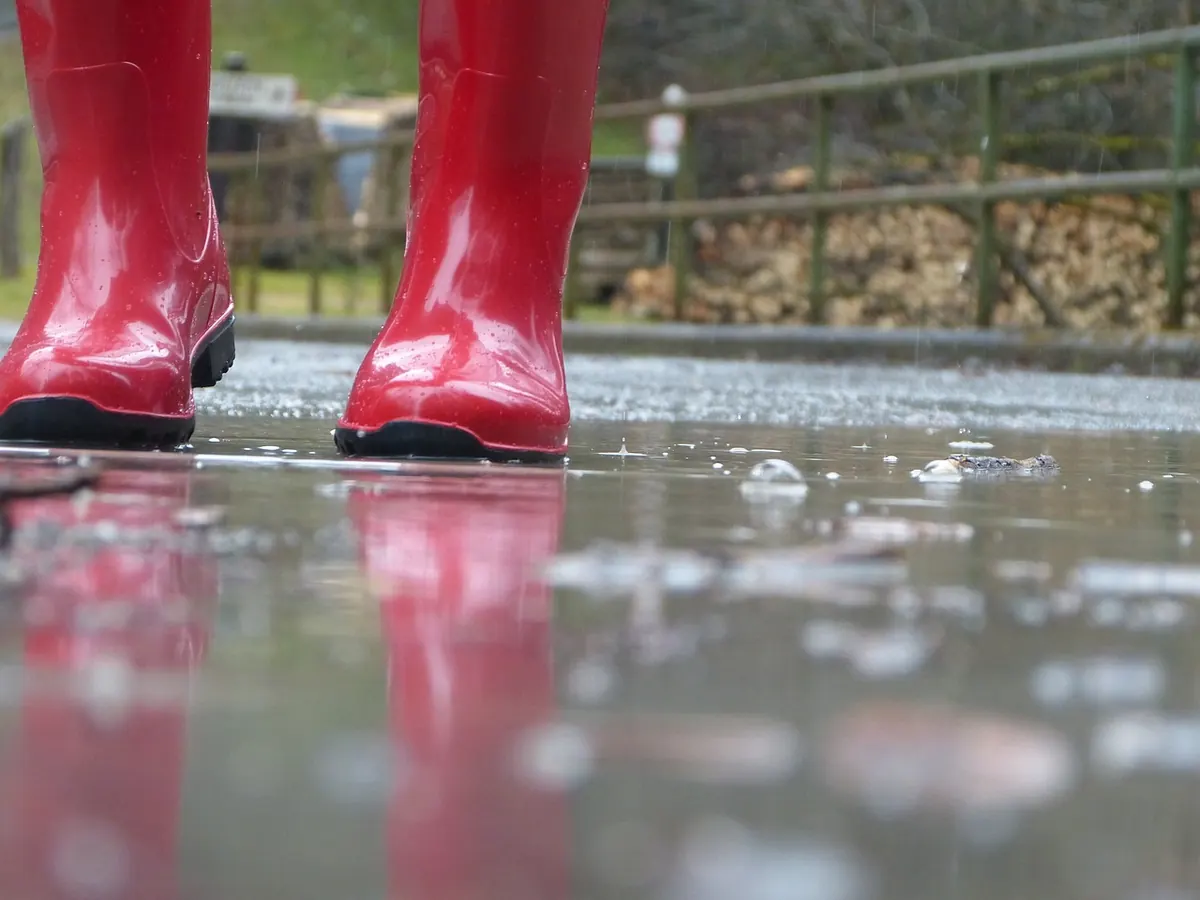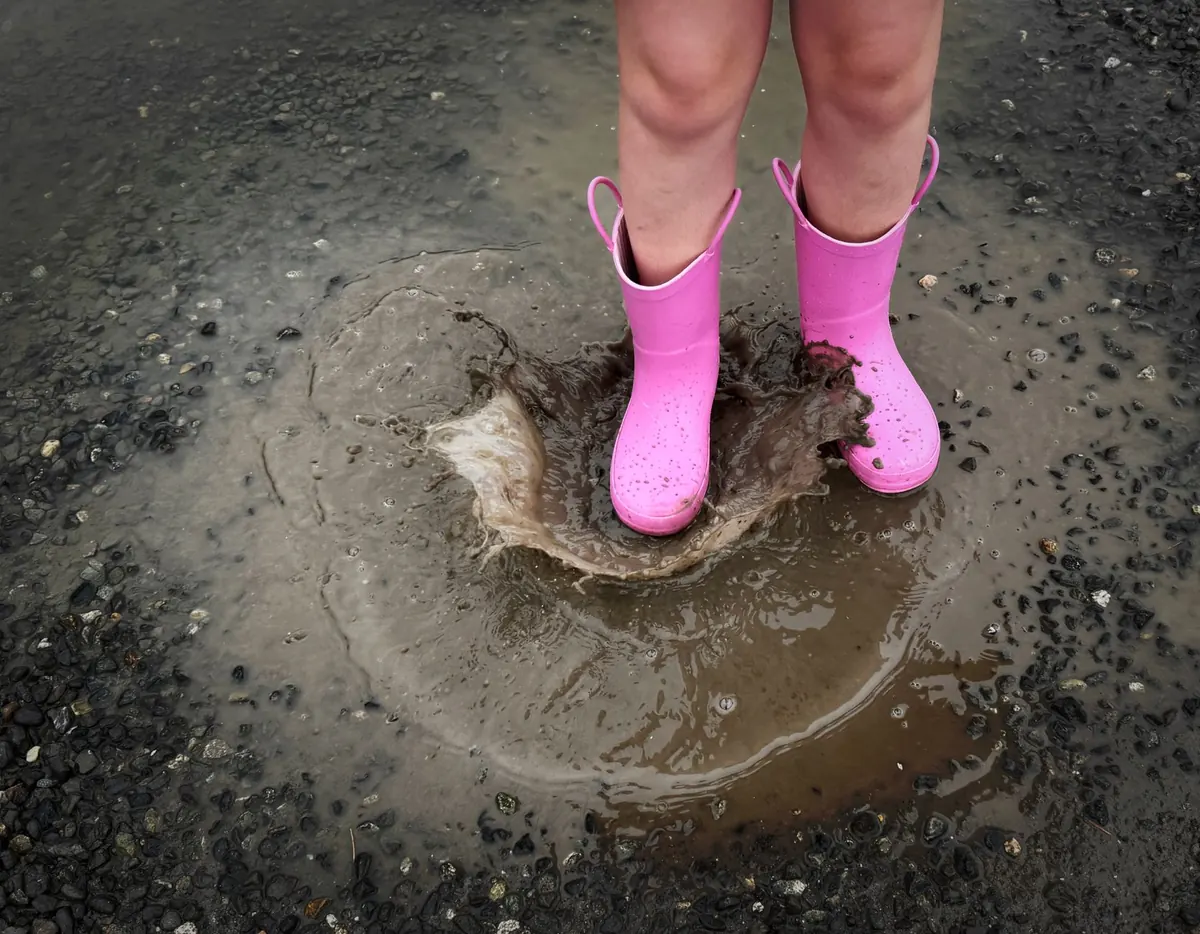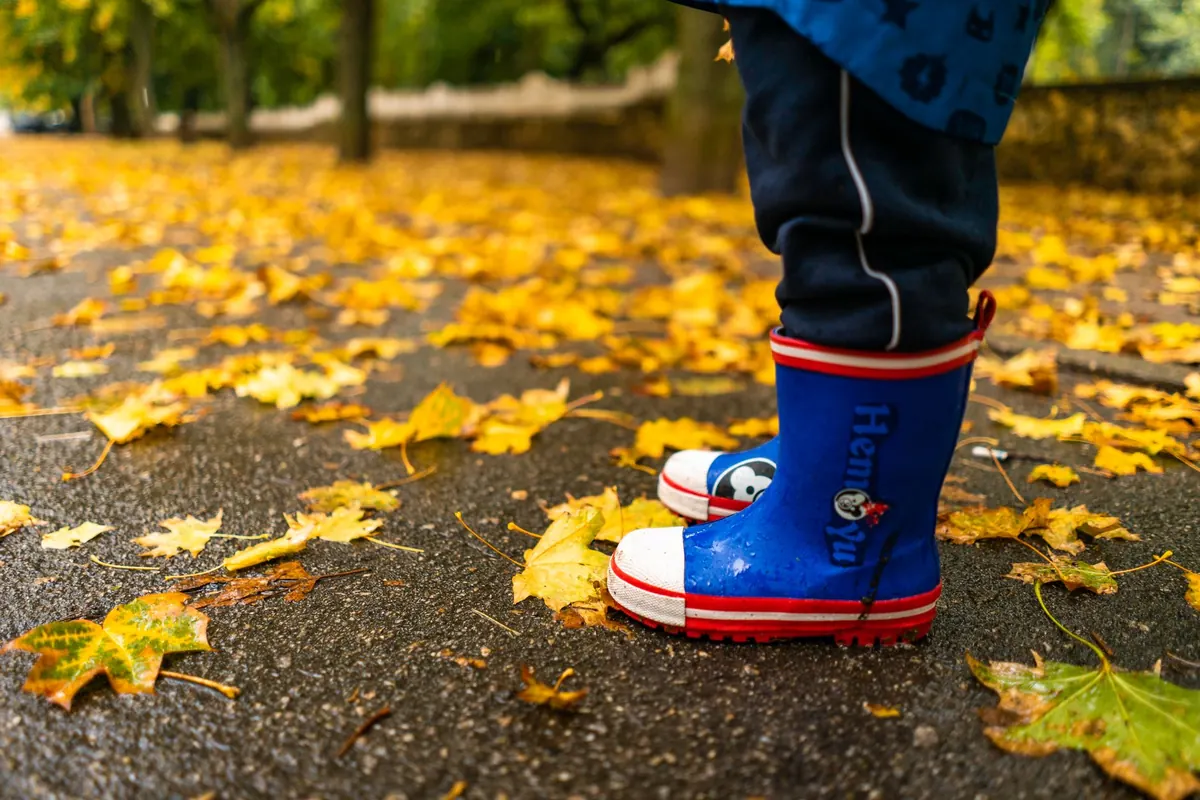
Your first pair of wellingtons arrived with a simple promise: dry feet. That part they usually deliver. What nobody mentions is that the same rubber that keeps water out also keeps everything else in, and after three miles of country lane your heels can feel like they have been sanded. The good news is that most wellington discomfort is not a boot problem. It is a socks-and-walking-style problem, and both are easy to fix.
Fit Comes Before Anything Else
Push your foot forward until your toes touch the front of the boot. You should still be able to slide a finger behind your heel. If your heel lifts more than a centimetre or so with every step, no sock will rescue you — the boot is too big or the wrong shape for your foot, and that movement is what grinds skin raw.
Check the shaft as well. A tall boot that grips your calf can feel secure for ten minutes and unbearable by mile three, especially if your calves are wider than the average mould. Shorter ankle-height wellies are far more forgiving and let your ankle move naturally.
One cheap upgrade worth making: take out the thin foam insole most wellies come with and fit a firmer, slightly cushioned one. It takes up a little volume in a roomy boot, adds a bit of shock absorption, and gives your foot something less sweaty to stand on.
Socks Do Most of the Work
Cotton socks are the classic mistake. Cotton holds sweat against the skin, softens it, and then friction finishes the job. Choose merino wool or a synthetic blend instead: merino stays warm when damp and resists odour, while polyester and acrylic blends dry quickly and slide rather than grab.
- Skip cotton entirely for any walk longer than a mile.
- Match thickness to the boot, not the weather. If the boot is loose, a thicker sock fills it; if it is snug, a thin sock prevents pressure points.
- Try a liner sock — a thin silk or synthetic layer under your main sock — if you blister easily. Friction happens between the two socks instead of against your skin.
- Pull socks smooth before you stand up. One crease under your heel becomes one blister.
- Carry a spare pair on any full-day outing and change at the halfway point.
Adjusting Your Gait for Rubber Soles
Wellington soles are flat and grippy but offer little cushioning, so your normal walking pattern does not quite transfer. Most people default to a long heel strike, which in wellies sends a jolt straight up through the heel and encourages the boot to slide.
Shorten your stride. Let your whole foot or the midfoot meet the ground rather than the heel alone. It feels odd for the first twenty minutes and then becomes automatic — and your feet stay noticeably fresher.
Resist the urge to curl your toes to keep the boot on. That gripping tension is what produces cramped toes and aching arches. If you have to grip, the boot is too loose.
On slopes, wellies roll and slide in ways walking boots do not. Take smaller steps, keep your feet flat where you can, and slow down on descents — that is where heels move most inside the boot.
The Small Details That Cause Rubs
Trousers tucked in or worn over the boot? Tucked keeps hems clean but bunches fabric against the top of the shaft. If you tuck, make sure your sock is smooth and the trouser is not folded into a hard ridge.
Grit is the quiet culprit. A single grain of sand between sock and heel will do more damage over four miles than a slightly wrong boot. Empty your boots at every gate, bench and stile.
If one heel always rubs, a felt heel pad or a strip of zinc oxide tape on the boot lining can change the contact point. Do not wait until the walk to test it. Wear it around the house first.
Blister Prevention, Step by Step
- Trim toenails straight across and file any rough edges a day or two before a long walk.
- Break boots in on short walks of two to three miles before attempting anything longer.
- Start with dry feet and dry socks. Dry between your toes properly.
- Apply a lubricant or a patch of tape to any spot that has rubbed before.
- Stop at the first hot spot. Take the boot off, dry the foot, smooth the sock, add a plaster. Ignoring it costs you the rest of the day.
- Change socks halfway through a full day out, especially if your feet run hot.
If you have diabetes, circulation problems or reduced sensation in your feet, treat foot care as a professional matter rather than a DIY one, and speak to your doctor or a podiatrist before long walks in wellingtons.
When Wellingtons Are the Wrong Tool
Wellies are excellent for wet grass, muddy lanes, dog walks, gardens and shallow puddles. They are not designed for rocky ground, steep hills or very long distances, because they offer no ankle support and very little cushioning underfoot. If your route is mostly stone tracks and climbs, walking boots or trail shoes will serve you better — and that is not a failure of the wellies, just a different job.
A Simple Routine for Your First Long Walk
Plan the route with an easy exit: a bench, a pub or a car park at the halfway mark, so you can stop, sit down, dry your feet and re-tape anything that is starting to complain. Pack two spare socks, a few plasters, a small cloth and a plastic bag for wet socks.
Build up gradually. Two miles, then four, then six. Dry your boots out of direct heat afterwards, and never on a radiator, which hardens the rubber and shortens their life. Get the fit and the socks right, keep your steps short, and wellington boots will carry you much further than most people expect.
Photo: Atlantic Ambience / Pexels